Language changes fast, and if you have ever scrolled through a comment section or opened a text message only to find a random string of capital letters, you already know the feeling. Modern American slang moves at the speed of the internet. One acronym that completely dominates text-based communication across the United States is IDGAF.
While it looks like a random alphabet soup at first glance, it actually carries a massive amount of emotional weight and cultural relevance. People search for this term because the tone behind it can be incredibly nuanced. It is easy to misread an acronym in a text, and understanding the exact social boundaries of this phrase prevents awkward digital miscommunications.
What Does IDGAF Mean?
IDGAF is a direct, highly popular acronym that stands for “I don’t give a f***.” In everyday English, it is used as a powerful, unfiltered way to express total indifference, apathy, or a complete lack of care about a specific situation, opinion, or person.
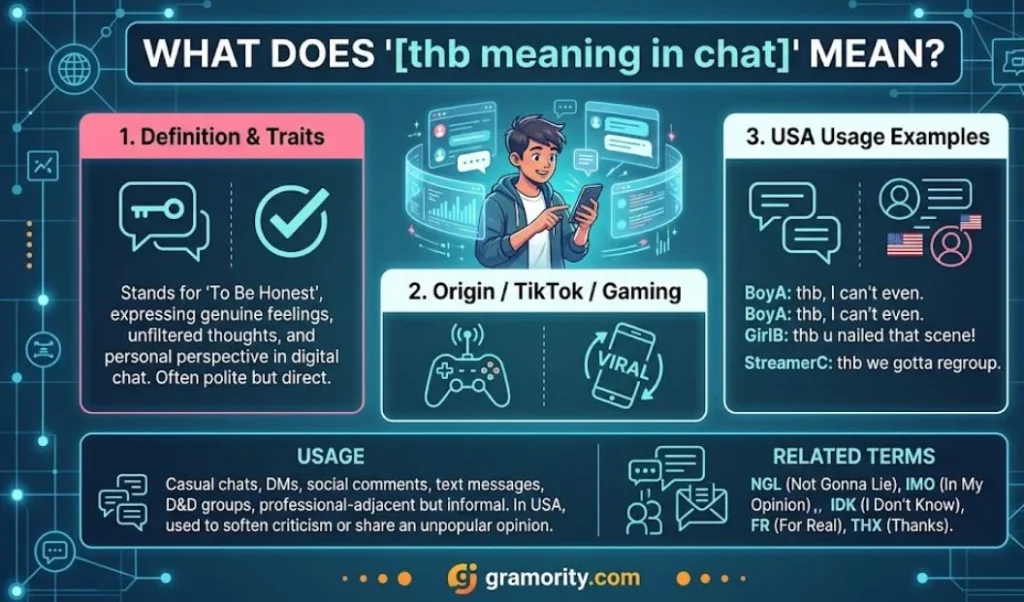
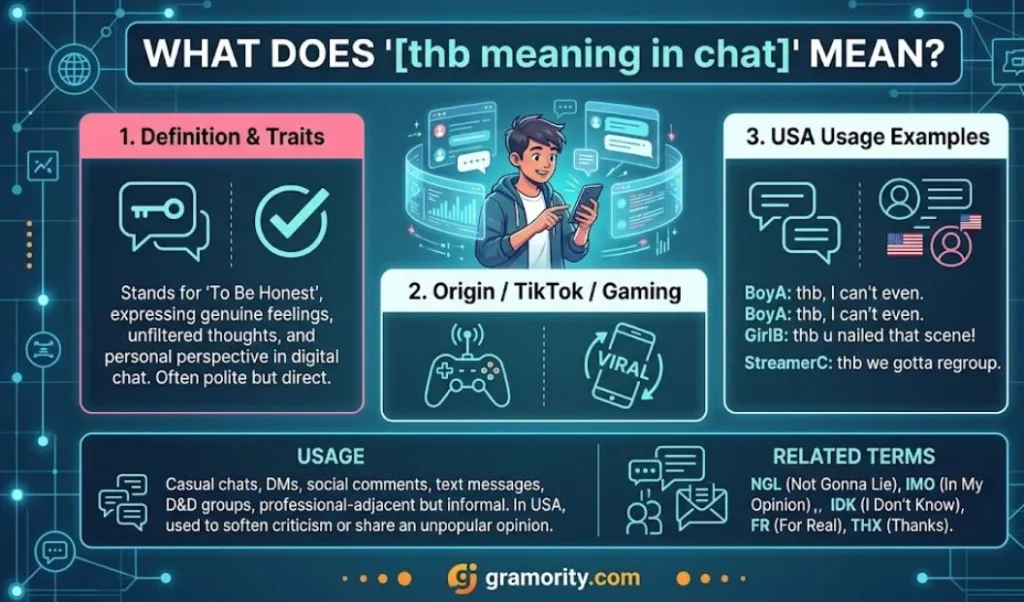
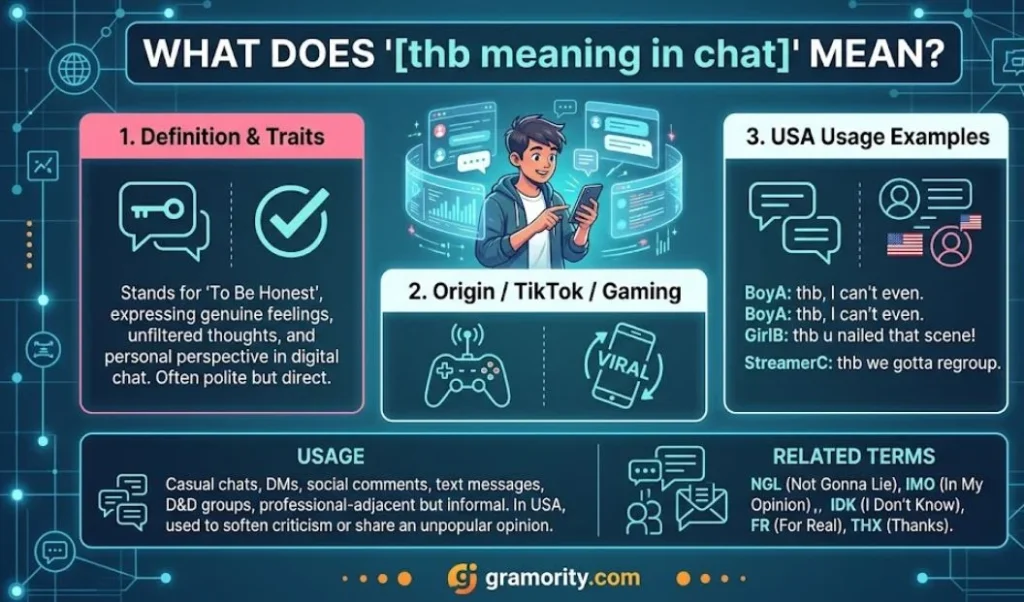
What is the thb meaning in chat?
In digital communication, thb meaning in chat stands for “to honest, bro” or a slight variation of “to be honest.” This internet slang and texting acronym is widely used across social platforms to introduce an authentic, unfiltered, or deeply candid personal opinion during messaging.
Why use this texting acronym in conversations?
- Signals Authenticity: Establishes immediate trust and transparency between participants in a group thread or private direct message.
- Speeds up Typing: Acts as an efficient shorthand alternative to typing out full phrases on mobile keyboards.
- Softens Blunt Opinions: Prepares the reader for a potentially harsh or contrasting viewpoint by framing it as genuine, friendly honesty.
IDGAF – Quick Meaning
At its core, IDGAF is the ultimate digital shrug. It is a shorthand way of saying that something has absolutely zero impact on your life, your emotions, or your current vibe.
- Core Definition: Total indifference or lack of interest.
- Tone: Highly casual, blunt, and potentially aggressive depending on context.
- Primary Medium: Text messages, social media comments, and casual digital threads.
Here are a few quick ways you might see it pop up in everyday conversations:
“They can cancel the show for all I care, IDGAF honestly.”
“Idgaf what the weather looks like tomorrow, I am still going to the beach.”
“He keeps talking about his new car and IDGAF at all.”
Origin & Background
While IDGAF feels like it belongs entirely to the TikTok and Instagram era, its roots go back much further. Long before it became a staple of Gen Z and Millennial digital vocabulary, the full phrase was a common idiom in spoken American English for decades.
The acronym format truly found its footing in the early days of internet relay chat (IRC) platforms, AOL Instant Messenger (AIM), and SMS texting in the late 1990s and early 2000s. Back then, character limits on cell phones meant every single letter mattered, prompting users to shorten heavy emotional phrases into quick bursts of letters.
As platforms like Twitter and TikTok gained global dominance, IDGAF evolved from a simple typing shortcut into a major cultural mindset. Musicians and pop culture icons frequently use the term in song lyrics, further cementing it into the mainstream American lexicon. Today, it represents a specific kind of modern stoicism—a protective layer of internet culture used to guard one’s mental peace against the endless noise of the online world.
Real-Life Conversations
To truly understand how this slang functions in the wild, it helps to look at how real people use it across different platforms. The meaning changes slightly based on who is typing and where the conversation is happening.
WhatsApp Text Between Friends
Chloe: Are you seriously going to wear those mismatched sneakers to the party tonight?
Marcus: Yeah, idgaf what people think lol. It looks cool to me.
Instagram DMs
Maya: Did you see that Sarah posted an entire story laughing about your old haircut?
Jessica: Honestly IDGAF about her drama anymore. I blocked her last week.
TikTok Comments Section
Brandon: This creator is so annoying, why is this on my timeline?
Tyler: Then scroll past? IDGAF if you like it or not, the rest of us do.
Casual iMessage
Jordan: The professor said the homework is due at midnight sharp or we get a zero.
Ryan: IDGAF at this point, I am too tired to even look at my laptop.
The word is incredibly viral in American culture right now because it taps into a collective feeling of burnout. With endless notifications, constant social media updates, and societal pressure to care about everything all the time, young Americans use the phrase as an emotional shield. It has become a badge of honor to show that you are entirely unbothered by outside opinions.
Emotional & Psychological Meaning
Beyond the literal swear word embedded inside the acronym, IDGAF carries deep psychological weight. It is an expression of total emotional detachment. When someone uses it, they are usually drawing a hard line in the sand to protect their energy. In a world where modern communication demands a constant reaction, saying or typing this acronym is a way to reclaim control over your own attention span.
It is a fascinating look at how modern digital communication works. Because we lack facial expressions and vocal tone over text, a sharp, four-letter acronym acts as an immediate punctuation mark for a person’s boundaries.
I remember a time when a colleague of mine was entirely overwhelmed by a minor corporate policy change that didn’t affect our department at all. He spent three days stressing over it until another teammate texted him a single line: “Dude, IDGAF about management’s new seating chart, and you shouldn’t either.” That blunt text immediately broke the tension. It wasn’t mean; it was a reality check that helped him realize he was wasting valuable emotional energy on something completely trivial.
Usage in Different Contexts
Navigating when to use this phrase requires a good understanding of social spaces. It does not carry the same weight in a text to your best friend as it does in an email to your boss.
On social media platforms like TikTok, X, and Instagram, IDGAF is used freely. It is often deployed to dismiss trolls, critique bad takes, or simply show that you are living your life without worrying about the comment section. The tone here is usually performative and confident.
Among close friends, the phrase shifts into a comfortable, casual tool. It can be used to show flexibility, such as letting a friend choose a restaurant because you genuinely do not have a preference. In romantic relationships, however, it can be dangerous. Telling a partner you don’t care about something they are bringing up can come across as cold and dismissive.
In professional settings, you should avoid this acronym completely. Using it in a workplace email, Slack channel, or during a meeting is considered highly unprofessional, disrespectful, and inappropriate. Even if you are close with your coworkers, the presence of the profanity within the acronym makes it a massive liability in a career environment.
The tone also changes drastically based on whether it is written in lowercase or uppercase. A lowercase “idgaf” usually implies a relaxed, lazy indifference. Writing it in all caps as “IDGAF” signals intense frustration, anger, or a firm demand for someone to stop talking about a topic.
When NOT to Use It
Because this acronym contains a strong profanity, there are many situations where using it will backfire. It should never be used in formal documentation, academic writing, or when communicating with figures of authority such as parents, teachers, or supervisors.
It is also important to avoid this phrase during moments that require genuine empathy or sensitivity. If a friend is sharing a difficult personal struggle, using this slang to describe a related situation can make you look incredibly callous and self-centered. It is a phrase built for trivial matters or personal boundary setting, not for handling delicate human emotions or complex interpersonal conflicts.
Common Misunderstandings
The biggest mistake people make with IDGAF is assuming it is always an expression of anger or hostility. While it can definitely be used aggressively, it is far more frequently used to express simple, harmless apathy.
Another common point of confusion is the literal vs. figurative use. When someone says “idgaf,” they rarely mean they are filled with rage. Instead, they are usually just stating a fact about their current level of interest. Misreading the intensity behind those four letters is a very common cause of unnecessary text-message drama.
To keep your digital communication sharp, it helps to expand your vocabulary with other language trends. You can check out our comprehensive guide to modern slang over at Gramority to stay completely ahead of the curve.
Slang Comparison Table
To see how IDGAF stacks up against other popular internet terms, let’s look at how it compares to similar expressions, opposites, and related phrasing.
| Slang Term | True Meaning | Emotional Intensity | Best Context |
| IDGAF | I don’t give a f*** | High / Blunt | Setting firm personal boundaries |
| IDC | I don’t care | Low / Medium | Quick, casual decisions between friends |
| IDCGO | I don’t care, go on | Medium | Showing mild interest despite low energy |
| Idcly | I don’t care, love you | Low / Playful | Softening a dismissive comment to a loved one |
| IKR | I know, right? | Medium / Positive | Showing strong agreement with someone |
| FR | For real | Medium / Earnest | Validating that a situation is serious |
Key Insight: While terms like “IDC” are great for deciding what to eat for dinner, IDGAF is saved for moments when you need to show an absolute, unshakeable lack of interest or when you want to make a bold statement about your personal independence.
Variations & Types
Like most internet slang, IDGAF has broken down into several variations and offshoots over the last few years.
- IDGAFOS: “I don’t give a f*** or s***.” An even more intense version used when someone wants to emphasize absolute, total detachment from a situation.
- IDGAF attitude: Referring to someone who lives life completely on their own terms without seeking external approval.
- Idgaf mode: A state of mind where a person decides to stop stressing over things they cannot control.
- IDGAF era: A personal phase of life focused entirely on self-care and ignoring critics or haters.
- IDGAF alternative: Cleaner phrases like “I don’t give a hoot” or “I couldn’t care less” used in mixed company.
- IDGAC: “I don’t give a crap.” A slightly softer version that removes the harshest profanity while keeping the exact same energy.
- IDGA: “I don’t give a…” An incomplete version often used as a stylistic choice in music lyrics or social media captions.
- IDGALS: “I don’t give a loose s***.” A rare, highly regional variation used for comedic, exaggerated effect in group chats.
How to Respond When Someone Uses It
Getting an “IDGAF” in a text thread can feel jarring. Knowing how to respond appropriately keeps you in control of the conversation’s direction.
Casual & Easygoing Replies
- “Fair enough, let’s talk about something else then.”
- “Haha got it, loud and clear.”
- “Honestly, same. It’s not worth the energy.”
Funny & Witty Replies
- “Tell me how you really feel though!”
- “Wow, don’t use up all your passion at once.”
- “Careful, your enthusiasm is blinding me.”
Mature & Balanced Replies
- “I respect that you don’t want to get involved in this.”
- “Understood. Let’s touch base on this when it actually matters.”
- “That is a good point, it really isn’t our problem anyway.”
Respectful & Firm Replies
- “I know you don’t care, but I need a quick answer to wrap this up.”
- “Got it. I will handle this on my own moving forward.”
- “Thanks for letting me know where you stand on this.”
Regional & Cultural Usage
The way IDGAF is used varies heavily across different global regions, cultures, and age groups. In Western cultures, specifically within the United States, the phrase is deeply tied to individualism. It is celebrated as a tool for personal freedom and self-expression.
According to linguistic trends documented by major language institutions like the Oxford English Dictionary, internet acronyms heavily adapt to regional baseline politeness levels. In many Asian and Middle Eastern cultures, where communication styles place a much higher emphasis on community harmony and respect for others, using a blunt phrase like IDGAF can be seen as profoundly rude or disruptive, even when translated into local digital spaces. Globally, it remains an anchor of international internet culture, recognized by young web users everywhere regardless of their native language.
There is also a massive generational divide. Gen Z treats IDGAF as a standard, everyday casual term, often tossing it into conversation with very little real malice. Millennials, on the other hand, tend to view the acronym as slightly more serious, reserving it for moments of genuine frustration or deep exhaustion.
Is It Safe for Kids?
Because the acronym explicitly contains a major English profanity, it is generally not considered appropriate for young children. Parents should note that while teenagers use it constantly to sound mature or unbothered online, the phrase can easily cross the line into cyberbullying or disrespect if it is directed at peers or authority figures in an aggressive manner.
Frequently Asked Questions
Is IDGAF a bad word?
The acronym itself is not a word, but because it directly stands for a phrase containing a strong profanity, it is widely considered vulgar and inappropriate for formal, polite, or professional speech.
What is the difference between IDC and IDGAF?
IDC stands for “I don’t care,” which is mild and suitable for casual daily choices. IDGAF contains a profanity and carries a much higher level of intensity, emotional detachment, or frustration.
Can I use IDGAF in a workplace text?
No. Using profanity-based acronyms in professional settings like Slack, Teams, or work emails is highly unprofessional and can result in disciplinary action.
Why do people say IDGAF mode?
It refers to a deliberate mindset shift where a person chooses to stop worrying about external drama, stress, or the negative opinions of others to protect their own mental health.
Is IDGAF rude?
It can be incredibly rude if directed at someone who is looking for a serious, empathetic conversation. However, if used generally to describe a situation, it simply means you are indifferent.
How do you pronounce IDGAF in real life?
Most people spell out the individual letters when speaking (“I-D-G-A-F”). However, some internet users phonetically pronounce it as a single word that sounds like “id-gaff” in highly casual settings.
Final Thought
Understanding modern internet terms like IDGAF is all about reading the room. Language is changing constantly, and these short acronyms give us a quick way to express deep, complex boundaries with just a few taps of a keyboard. As long as you keep it out of the office and away from formal conversations, using it can be a great, confident way to show that you are fully in charge of where your emotional energy goes. Use your digital vocabulary with confidence, protect your mental peace, and don’t be afraid to let the trivial things slide.