The digital world moves fast, and keeping up with the shorthand your friends drop into your inbox can feel like trying to decode a brand-new language. If you have ever been staring at your screen wondering about the exact ig meaning text, you are definitely not alone. Language online changes by the second, and missing a single beat can completely alter the vibe of your conversation.
What does ig mean in text messages?
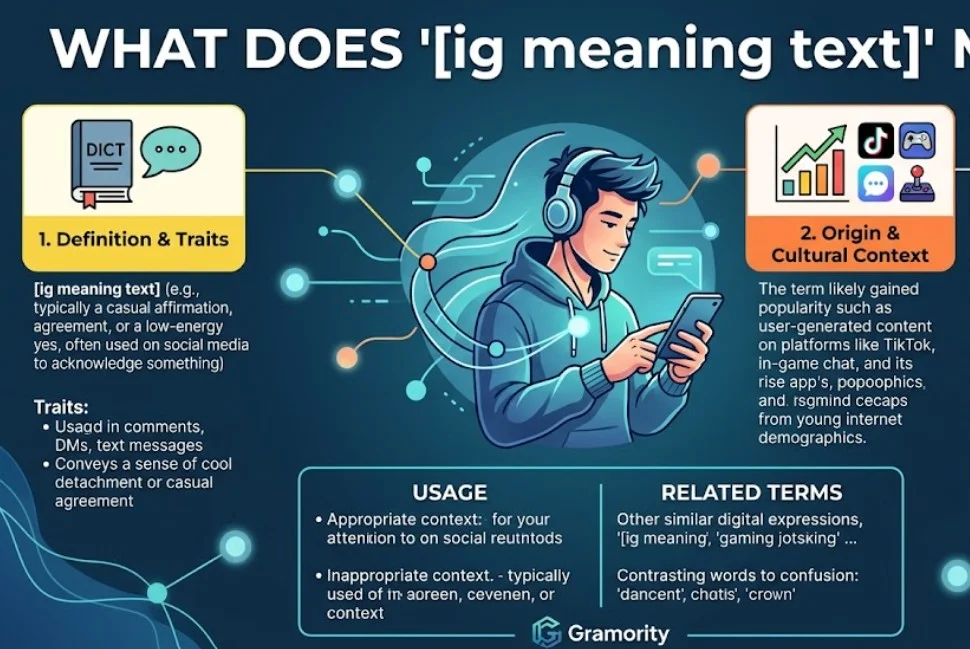
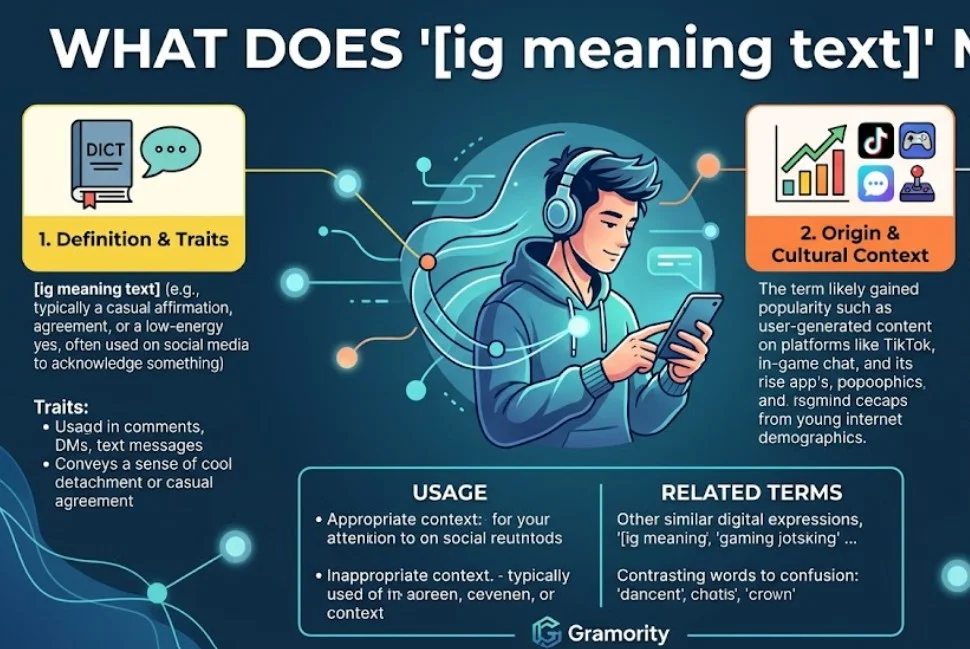
In text messages, ig is the viral internet slang shortcut for “I guess.” It is universally typed in lowercase to casually signal a relaxed shrug, mild hesitation, or low-energy agreement to a plan without sounding overly enthusiastic or formal.
Why do people use the ig meaning text abbreviation?
- Saves Typing Time: Instantly cuts down keystrokes on mobile keyboards, acting as an efficient tool for rapid-fire digital conversations.
- Softens Direct Refusals: Lowers social stakes by expressing mild hesitation or resignation without creating unnecessary confrontation or sounding harsh.
- Signals Unbothered Vibe: Helps Gen Z and younger Millennial texters maintain a cool, detached, and entirely relaxed online persona.
Why Everyone Is Searching for the Meaning of IG in Texting
We have all been there. You send a thoughtful message or a direct question, and the response you get back is a simple, two-letter “ig.” It is incredibly common to wonder if the person on the other side is being dismissive, running out of time, or just keeping things casual.
People constantly search for this term because digital text lacks tone of voice. Without hearing a person’s vocal inflection or seeing their facial expression, a short phrase like “I guess” can sound passive-aggressive, bored, or perfectly friendly depending entirely on your current mood.
This guide is designed to clear up that exact confusion. By looking at how this tiny piece of slang works in everyday American communication, you will learn how to read between the lines, protect your relationships from unnecessary misunderstandings, and use it naturally yourself.
IG – Quick Meaning
At its core, the slang term is an easy, low-effort shortcut. Instead of typing out the full phrase, typing those two letters saves a fraction of a second and keeps the energy of the conversation feeling completely unstudied.
- Primary Definition: I guess.
- Secondary Meaning (Context Dependent): Instagram (when used as a proper noun, like “check my IG”).
- Tone Conveyed: Indifference, mild agreement, hesitation, or casual acceptance.
“Are you coming to the party tonight?”
“ig so, let me finish this homework first.”
“That movie was kind of long, right?”
“It was alright ig, the ending was cool.”
Origin & Background of the Slang
Long before it became a staple of modern text messages and TikTok comment sections, shorthand text dates back to the early days of cell phones. Back when we had to tap a number pad multiple times just to type a single letter, every saved keystroke mattered. Abbreviations like “BRB” and “LOL” paved the way for more nuanced emotional shortcuts like “ig.”
While the acronym historically doubled as a quick way to reference Instagram, the lowercase “ig” blossomed independently inside the typing habits of Gen Z and younger Millennials. On platforms like TikTok, Snapchat, and Discord, communication is rapid and highly conversational. The phrase evolved from a strict time-saver into a deliberate stylistic choice.
Today, using the lowercase version signals that you are not taking the conversation too seriously. It adds a layer of relaxed coolness to a sentence, making the speaker appear entirely unbothered or flexible about the outcome of a plan.
Real-Life Conversations
Seeing how this shorthand looks in action is the best way to understand its true social footprint. Here are a few highly realistic text exchanges showing how people across the USA use it every day.
Example 1: Instagram DMs
Sarah: Did you see that Marcus posted his new car on his story?
Jessica: ig he finally saved up enough from that summer job.
Sarah: Right! Good for him honestly.
Example 2: WhatsApp Chat
Tyler: Hey man, are we still hitting the gym at 6?
Brandon: ig we can, but my legs are still completely dead from Tuesday.
Tyler: Haha we can do a light upper body day instead, don’t worry.
Example 3: TikTok Comments
User_Alex99: This filter makes literally everyone look like a supermodel lol.
User_Chloe: ig i’m the only one it doesn’t work on then 💀
User_Alex99: No way, you just gotta find the right lighting!
Example 4: Casual Text Messages
Emily: Do you think Mrs. Davis is going to pop a quiz on us tomorrow?
Ryan: ig we’ll find out, she looked pretty annoyed during the lecture today.
Emily: Ugh, time to actually open the textbook tonight.
Why Is It Viral?
The word stays trending because it perfectly mirrors the current mood of American youth culture: a mix of casual detachment, ironed-out enthusiasm, and a desire to avoid sounding overly eager. It is an effortless emotional shield that keeps text conversations low-stakes.
Emotional & Psychological Meaning
Online communication is a psychological balancing act. When someone types “ig,” they are often managing expectations or protecting their own social energy. It expresses a state of mild resignation. It is the digital equivalent of a shrug of the shoulders or a slight nod of the head.
People use it to soften a statement. Telling someone “No, I don’t really want to go” can feel harsh and confrontational. Saying “ig I could go” keeps the peace while quietly signaling that you aren’t completely thrilled about it. It allows people to participate in social life while holding onto a tiny bit of personal autonomy.
I remember a conversation with an old colleague who used this abbreviation constantly. At first, I worried they were perpetually unhappy with my suggestions. Over time, I realized it was just their way of staying relaxed and low-pressure. It taught me that modern text communication isn’t about rigid grammar; it’s about matching the emotional frequency of the person on the other side of the screen.
Usage in Different Contexts
Context changes everything when it comes to internet slang. Dropping this abbreviation in the wrong place can completely change how people perceive your professionalism or your interest level.
Social Media
On platforms like Snapchat, TikTok, or Instagram, the term is completely at home. You will see it in captions, quick replies, and comments. Here, it keeps your online persona looking approachable, relaxed, and entirely authentic.
Friends & Relationships
With close friends, it functions as a tool for quick consensus. It means you are willing to go along with a plan even if it wasn’t your very first choice. In romantic relationships, however, be careful—overusing it can sometimes make you look emotionally distant or uninterested to your partner.
Work & Professional Settings
This is where you want to hit the brakes. Using internet abbreviations in a professional email to your manager or a client can come across as highly unprofessional or sloppy. If you are discussing a project deadline on Slack or Teams, skip the shorthand and type out “I agree” or “That works for me” to maintain a polished reputation.
When NOT to Use It
While the term is incredibly versatile, there are clear moments where it should be left out of your vocabulary entirely.
Avoid using it during serious, emotionally heavy conversations. If a friend is opening up to you about a difficult breakup or a family emergency, replying with an abbreviated shorthand can feel incredibly cold, dismissive, and hurtful. These moments demand full sentences and genuine, unhurried empathy.
It is also wise to avoid it when you need to show clear, explicit consent or firm boundaries. If someone asks for your definitive permission on an important matter, keeping things vague with a casual shrug of a text can cause massive misunderstandings down the line.
Common Misunderstandings
The biggest mistake people make with this slang is assuming it always carries a negative, passive-aggressive sting. Parents and older generations often see it and think the texter is being intentionally rude or snarky.
In reality, the tone is usually completely neutral. Most of the time, the person typing it isn’t mad at you; they are simply multi-tasking, tired, or just trying to type as quickly as possible while walking down the street. It is a tool of convenience, not a weapon of disrespect.
Slang Comparison Table
To help you visualize how this abbreviation stacks up against other popular expressions in the digital lexicon, look at this quick breakdown of its closest relatives.
| Slang Term | True Meaning | Emotional Vibe |
| ig | I guess | Casual acceptance, mild indifference, low energy |
| idk | I don’t know | Total uncertainty, open-ended, neutral |
| idc | I don’t care | Direct indifference, can sometimes border on blunt |
| fr | For real | Strong agreement, emphasis, validation of a point |
| imo | In my opinion | Standard sharing of a personal perspective |
Key Insight: While terms like “idk” express a total lack of information, “ig” shows that the person actually has an opinion or an answer—they are simply delivering it with a relaxed, low-stakes attitude.
Variations & Types of the Slang
The abbreviation can adapt depending on exactly where it is placed inside a sentence or how it is capitalized. Here are the most common variations you will spot in your chats.
- ig (at the start): Used to introduce a hesitant thought (e.g., “ig we can try that place”).
- ig (at the very end): Adds a casual, unbothered shrug to the end of a statement (e.g., “It’s fine ig”).
- ig so: A direct, slightly reluctant confirmation to a yes-or-no question.
- IG (all caps): Typically refers to the actual platform Instagram rather than the phrase “I guess.”
- ig? (with a question mark): Asking for mild confirmation from the other person (e.g., “We’re meeting at 5, ig?”).
- iggins: An older, highly niche internet variation that is rarely seen in modern 2026 conversations.
- ig lol: Combines hesitation with a lighthearted laugh to ensure the message doesn’t sound angry.
- ig… (with ellipses): Trailing off to show heavy doubt, hesitation, or deep uncertainty about a plan.
How to Respond When Someone Uses It
Knowing how to pivot when you receive this text keeps your conversations moving smoothly without any awkward pauses.
Casual Replies
- “Cool, see you then!”
- “Sounds like a plan.”
- “Awesome, talk later.”
Funny Replies
- “Wow, don’t sound too excited all at once! 😂”
- “Spoken with the absolute passion of a true believer lol.”
- “I can practically feel your burning enthusiasm from here.”
Mature Replies
- “If you’d rather do something else, I’m completely open to ideas.”
- “Let me know if a different time works better for your schedule.”
- “No pressure at all, we can always push this to next week.”
Regional & Cultural Usage
The way this slang is interpreted can shift subtly depending on who you are talking to and where they grew up.
Western Culture
In the United States and Canada, the term is deeply embedded in digital text culture. It is treated as an everyday conversational lubricant to keep things moving forward without unnecessary formality.
Global Internet Usage
Because American social media platforms dictate so much of global internet culture, young people in Europe, Asia, and the Middle East who speak English as a second language use the phrase frequently in their online spaces to match the tone of global trends.
Generational Differences (Gen Z vs. Millennials)
Millennials are highly comfortable with the term but will often use it alongside standard punctuation or mixed into full sentences. Gen Z, on the other side, prefers a completely lowercase presentation, often omitting periods entirely to ensure the message feels visually light and completely unstudied.
Is It Safe for Kids?
Parents can breathe a sigh of relief on this one. The term is entirely safe, clean, and free of any hidden adult meanings, dangerous double entendres, or risky counter-culture references.
It is simply a harmless linguistic shortcut that kids use to talk to their friends about school, video games, and weekend plans. There is no need for parental monitoring or concern if you spot this particular abbreviation on your child’s phone screen.
Frequently Asked Questions
Does ig mean Instagram or I guess?
It can mean both, but context makes the answer obvious. If someone says “hit me up on ig,” they are talking about the social media app. If they say “it’s fine ig,” they mean “I guess.”
Is using ig rude in a text message?
Not inherently. While it can sometimes sound a little bored or distant, it is usually just a casual, low-energy way to say yes without being overly dramatic or formal.
Why do people type ig in lowercase letters?
Lowercase letters look far more relaxed, informal, and effortless. Typing in all capital letters can make a short abbreviation look like shouting or give it an accidental sense of urgency.
What is the difference between ig and idk?
“ig” means you are giving a mild, slightly hesitant agreement to something. “idk” stands for “I don’t know,” which means you genuinely lack the information to answer a question.
Can I use ig in a business email?
It is highly recommended to avoid it in professional communication. Using internet slang with bosses, clients, or colleagues can make your writing appear sloppy, overly casual, or careless.
Final Thought
At the end of the day, digital language is all about human connection. Slang terms like this are not destroying our ability to communicate; they are simply giving us new, highly nuanced tools to express our moods in an era dominated by screens. Understanding these subtle shifts allows you to navigate your social world with absolute confidence. For more deep dives into digital culture and mastering the shifting landscape of modern communication, feel free to explore the resources over at Gramority, where we keep you perfectly aligned with the internet’s ever-evolving vocabulary. Don’t be afraid to drop these terms into your casual chats—it’s all part of keeping our shared human conversation fresh, vibrant, and beautifully connected.