pu slang meaning, The internet moves fast, and keeping up with the vocabulary of digital spaces can feel like a full-time job. If you have recently spotted the two-letter combination “PU” on your feed or in a text message, you are likely wondering what it signifies and how it fits into modern American conversations.
What Does PU Mean?
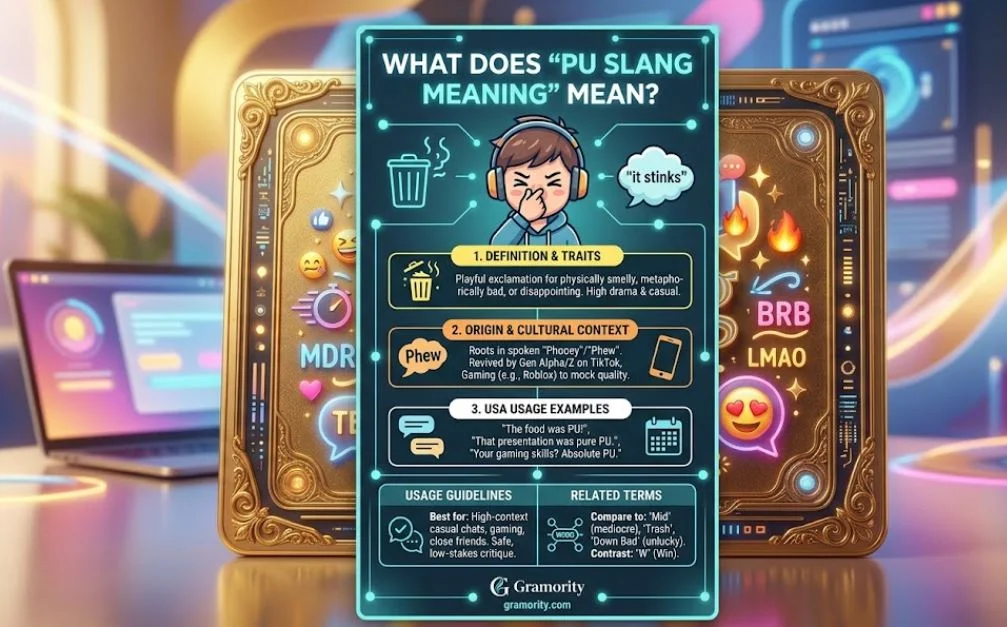
The pu slang meaning refers to a playful digital exclamation used in the USA to describe something physically smelly or metaphorically “stinky” in quality. It acts as text-based shorthand for real-world sensory disgust, indicating a disappointing situation, bad vibe, or poor performance.
Why is this expressive term trending in American internet culture?
- Replaces Physical Cues: It bridges the digital gap by allowing users to textually replicate an immediate, highly visual nose-wrinkling reaction.
- Low-Stakes Criticism: It serves as a conversational safety valve, letting people reject an idea or poor quality without sounding overly aggressive.
- Nostalgic Childhood Appeal: Modern social media platforms have revitalized this traditional playground exclamation, turning it into a viral, high-context internet trend.
Decoding the Online Scent: Why Everyone is Searching This Term
Language has always evolved to mimic human behavior, but the explosion of short-form video platforms has accelerated this shift dramatically. People are constantly looking up the PU slang meaning because text communication lacks the physical cues of human interaction. You cannot wrinkle your nose or wave your hand in front of your face through a smartphone screen.
This specific term bridges that gap perfectly. It allows users to inject immediate, highly visual sensory reactions into text strings, comment sections, and direct messages. It solves the confusion of trying to express visceral disgust or lighthearted disapproval without writing a long, drawn-out explanation.
PU Slang – Quick Meaning
At its core, the term is a sensory exclamation turned digital shorthand. It serves as a quick way to react to undesirable situations or physical environments.
- Primary Definition: An exclamation used to denote a bad smell or a highly disappointing situation.
- Tone: Typically casual, humorous, exaggerative, and slightly dramatic.
- Intent: To quickly signal dislike, physical aversion, or metaphorical distaste.
“I walked into the breakroom after someone microwaved fish. PU!”
“Your attitude today? Absolute PU.”
“That exam grade was pure PU, honestly.”
Origin & Background of the Term
Unlike modern acronyms born entirely in chat rooms, this phrase has deep historical roots in spoken English before it ever transitioned onto the screen. Historically, humans have made variations of the “phew” or “pooh” sound for centuries to instinctively blow away bad air or express disgust.
In American culture, it became a standard childhood playground exclamation throughout the 20th century. Kids would yell it whenever they passed a garbage truck or a messy bedroom.
The digital evolution occurred when Gen Z and Gen Alpha users began looking for text-based ways to replicate real-world expressions. TikTok, Instagram Reels, and gaming platforms like Roblox breathed new life into the term.
Instead of typing out a long sentence about how a situation or a piece of media is bad, users reverted to this childhood classic. It evolved from a literal comment about physical odor into a sweeping piece of metaphorical slang used to describe anything of poor quality.
Real-Life Conversations
Seeing how this phrase operates in daily digital life helps clarify its versatility across different social media ecosystems.
Example 1: WhatsApp Chat
Blake: Hey did you end up cleaning out the trunk of your car after the camping trip?
Camila: No not yet. Why do you ask?
Blake: I just dropped my keys in the back seat. PU! It smells like wet dog and old socks in there.
Example 2: Instagram DM
Mason: Did you see the final score of the game last night?
Liam: Dude don’t remind me. Absolute PU performance from our defense in the fourth quarter.
Mason: Truly tragic. We looked like a high school team out there.
Example 3: TikTok Comments
User 1: The special effects in this movie trailer look like they were made on a smartphone from 2012.
User 2: PU 💀 I was actually excited for it too until I saw this clip.
Example 4: Text Messages
Sophia: Are you still going to that restaurant down the street for lunch?
Harper: Nah walked by and they had a plumbing issue today. The whole block was a major PU scenario.
Sophia: Yikes thanks for the warning saving my appetite for somewhere else.
Why is it viral? It is currently trending across American youth culture because it is punchy, instantly recognizable, and carries a nostalgic charm that cuts through the noise of more complex internet acronyms.
Emotional & Psychological Meaning
Using this term goes beyond just identifying a bad scent; it taps into a specific psychological desire for shared expression. In modern digital spaces, people use sensory language to make their virtual presence feel more tangible and human.
When you type this exclamation, you are expressing a blend of lighthearted disgust, dramatic disappointment, and instant rejection. It allows the speaker to reject an idea, an object, or an environment without sounding overly aggressive or deeply angry.
It functions as a conversational safety valve. It keeps the mood relatively light while still making your distaste completely clear.
Consider a real-world scenario from my own experience coaching young writers. A student once turned in a rough draft of an essay that they knew wasn’t their best work. Instead of launching into a heavy defense or feeling deeply insecure, they laughed, handed over the paper, and whispered, “The thesis statement is a bit PU right now, but I’ll fix it.”
That simple term dissolved the tension. It turned a potentially stressful critique into a relatable, human moment of shared understanding.
Usage in Different Contexts
Understanding where to deploy this slang ensures you use it naturally without creating awkward social friction.
Social Media
On platforms like TikTok, Instagram, and X, the term is completely at home. You will see it in comment sections reacting to terrible cooking videos, bad fashion choices, or cringeworthy internet trends. It is a quick engagement tool used to show collective agreement that something is missed the mark.
Friends & Relationships
Among close peers, it serves as a highly effective tool for teasing and casual banter. You can use it to poke fun at a friend’s messy room, their terrible gaming skills, or a questionable outfit choice without causing genuine offense. It relies heavily on mutual comfort and shared humor.
Work & Professional Settings
This is a space where you should generally avoid the term. Using it in an email to a manager or during a corporate presentation can come across as immature, unprofessional, and overly casual. Stick to more objective language when critiquing professional projects or workplace situations.
Casual vs Serious Tone
The term is inherently casual and leaning toward the humorous side. If a situation is genuinely serious, tragic, or deeply upsetting, using this slang will make you seem dismissive or emotionally detached. Keep it reserved for low-stakes moments of disapproval.
When NOT to Use It
While the phrase is widely accepted in casual circles, there are distinct boundaries to keep in mind regarding social appropriateness. Do not use it to describe cultural foods that may be unfamiliar to you, as this can easily border on insensitivity and alienate others.
Additionally, avoid using it in situations where clear, direct communication is required to solve a problem. If a colleague delivers subpar work, telling them their project is “PU” does not provide constructive feedback; it merely insults the effort.
Always ensure your audience understands the playful, informal nature of the word before dropping it into a conversation.
Common Misunderstandings
The most frequent mix-up involving this term is the literal versus figurative application. Older generations or those unfamiliar with current online trends might assume that the word always means there is a physical odor nearby.
If you tell someone that a new movie is “total PU,” they might genuinely ask if the theater had a ventilation issue. Another misunderstanding stems from tone confusion in text format. Because it is a short exclamation, if written without context or emojis, it can sometimes read as harsher than intended.
Slang Comparison
To see how this word measures up against other popular expressions found in American pop culture, it helps to look at them side by side.
| Term | Context | Tone | Meaning |
| PU | Physical odors or low-quality situations | Playful, dramatic, casual | That smells bad or that is highly disappointing. |
| Mid | Assessing quality or talent | Nonchalant, critical | Average, mediocre, or not worth the hype. |
| Trash | Describing performance or objects | Aggressive, definitive | Completely useless, terrible, or broken. |
| Down Bad | Describing a person’s emotional state | Empathetic, humorous | In a terrible situation or desperately longing for something. |
Key Insight: While terms like “mid” or “trash” focus purely on the objective quality of an item, PU remains unique because it roots its critique in a physical, sensory reaction, making the feedback feel more immediate and expressive.
Variations & Types
Depending on how it is typed, capitalized, or extended, the meaning can shift slightly in intensity.
- P.U. (With Periods): The classic, traditional spelling often used by older generations or in formal transcriptions.
- Puuuuu (Extended): Used in text messages to show extreme physical disgust or a massive level of disappointment.
- PU Emoji Combo (PU 🤢): Combines the text with a green nauseated face to emphasize physical sickness from a scent.
- Metaphorical PU: Used strictly to describe situations, like a bad business deal or a terrible weather forecast.
- Literal PU: Used exclusively when encountering garbage, spoiled milk, or dirty laundry.
- Double PU: A repetitive variation used for emphasis when a single exclamation isn’t enough to capture the vibe.
- The Silent PU: Sending just the letters as a reaction image or meme to a friend’s bad take online.
- Soft PU: Used gently when teasing a pet or a toddler for making a small, everyday mess.
How to Respond When Someone Uses It
Your response depends entirely on the context of the conversation and how much you agree with the assessment.
Casual Replies
- “I know, right? It’s completely unbearable.”
- “Yeah, let’s get out of here ASAP.”
Funny Replies
- “Don’t worry, it builds character.”
- “My bad, I forgot to wear deodorant today.”
Mature Replies
- “Let’s figure out how we can fix this situation so it’s better next time.”
- “I agree it’s not ideal, but we can definitely improve it.”
Respectful Replies
- “Thank you for pointing that out, I’ll take care of it immediately.”
- “Understood, I appreciate your honesty about the quality.”
Regional & Cultural Usage
The understanding of this term shifts quite a bit depending on where you are in the world and who you are talking to.
Western Culture
In the United States and Canada, this expression is a staple of suburban upbringing and digital slang. It is universally understood across most geographic regions, from coastal cities to midwestern towns, as a standard reaction to something unappealing.
Asian & Middle Eastern Cultures
In many non-Western cultures, the phonetic sound does not exist as a native exclamation for bad odors. While global internet usage has introduced the term to English-speaking youth worldwide, locals in these regions are far more likely to use their own regional sounds or specific cultural words to express physical disgust.
Generational Differences
Gen Z and Gen Alpha use the term fluidly as a metaphorical adjective to describe abstract concepts like experiences, media, and moods. Millennials and Gen X, however, tend to use it almost exclusively in its literal sense to describe actual, physical smells in the real world.
Is It Safe for Kids?
Yes, this term is completely safe, clean, and appropriate for younger audiences. In fact, it originated largely as a playground-safe alternative to more vulgar or aggressive swear words used to express dislike. Parents and educators do not need to worry about kids using it, as it carries no inappropriate double meanings or offensive undertones.
To explore more cultural trends and linguistic shifts shaping modern American discourse, check out the deep-dive resources over at Gramority, which tracks how digital spaces influence our daily speech patterns. For a historical perspective on how human language adapts to sensory experiences, the Linguistic Society of America offers fascinating studies on phonetic evolution.
Advanced Cultural Perspectives on Modern Expression
The way American digital slang ripples across the globe highlights the fascinating mechanics of internet-era globalization. When terms like this move from localized US neighborhoods onto global social feeds, their adoption patterns reveal a lot about regional communication styles.
Global Internet Adaptation
Outside of North America, international internet users often adopt Western linguistic trends through exposure on short-form video platforms. However, the application varies:
- Northern Europe: Often integrated seamlessly into English-language commentary by bilingual speakers, particularly within gaming streams and tech forums.
- Latin America: Frequently paired with localized emojis or translated directly into regional equivalents during text chats, blending internet culture with traditional expressions.
- Oceania: Used much like it is in the United States, keeping its playground roots while comfortably slipping into casual text messaging among younger demographics.
The Shift in Modern Communication
What this linguistic pattern reveals about modern communication is a distinct preference for high-context, low-effort expressions. In a fast-paced digital world, typing out a nuanced critique requires time and emotional energy. Shorthand sensory terms solve this problem by summarizing complex feelings into a universally understood vibe. They allow for instant emotional synchronization between the speaker and the audience.
The Psychology of Social Disapproval
Expressing dislike or disapproval online is a social minefield. If a comment is too harsh, it risks alienating the group or inviting conflict. If it is too vague, the point is lost entirely. This is where playful sensory slang acts as a vital tool for social cushioning.
[Negative Feedback Given Directly] ──> High Tension / Conflict Risk
[Negative Feedback Given via Playful Slang] ──> Low Tension / Shared Humor
By framing an unfavorable review or an unpleasant situation around a dramatic, childlike exclamation, you signal to your conversation partner that while you dislike the object in question, you are not taking the matter too seriously. It softens the blow of criticism, turning what could be a negative interaction into a moment of shared, lighthearted agreement.
Summary Checklist for Everyday Usage
To ensure you are maximizing your communication impact without committing a social faux pas, keep this quick checklist in mind before using the term:
- Audience Check: Are you communicating with close peers, friends, or family members? (Yes = Safe to use)
- Context Check: Is the situation lighthearted, humorous, or minor? (Yes = Safe to use)
- Setting Check: Is this a casual text, a social media comment, or a direct message? (Yes = Safe to use)
- Professional Boundary: Is this an email to a supervisor, a client, or a formal academic submission? (Yes = Avoid using)
Final Interactive Takeaway
The English language is an ever-evolving ecosystem, shaped constantly by our real-world experiences and digital interactions. Keeping up with changing vocabulary is not about memorizing every new term that appears on a screen; it is about understanding the human emotion and intent behind those words.
The next time you encounter an experience, a piece of media, or an environment that completely misses the mark, you have the perfect linguistic tool to call it out with confidence, humor, and clarity. Embrace the playful side of modern speech and let your conversations reflect the dynamic nature of communication today.
Frequently Asked Questions
Is PU an acronym for something?
No, it is not an acronym. It is a phonetic spelling of a spoken sound that humans naturally make when reacting to an unpleasant odor or a frustrating situation.
How do you pronounce PU?
It is pronounced by saying the names of the two letters individually: “Pee-Yoo.”
Can I use this slang in a professional email?
It is best to avoid it in professional settings. The term is highly casual and can make a professional message seem immature or dismissive to colleagues or clients.
What is the difference between PU and phew?
While they sound similar, “phew” is typically used to express relief after a close call or a stressful event, whereas the other term is used strictly to denote disgust or poor quality.
Why do people say PU when something smells?
The sound mimics the natural human reflex of blowing air out through the mouth and nose to clear out bad scents and keep away foul air.